
 By
By Have you ever spent thousands of rupees on skincare products but still didn’t see the results you expected?
The problem might not be your products—it could be the order in which you’re applying them.
Even the best vitamin C serum, niacinamide serum, or moisturizer won’t work properly if they’re layered incorrectly. Applying skincare in the right order allows every product to absorb effectively and deliver its intended benefits.
Whether you’re a beginner or already have a 10-step routine, understanding what order should you apply skincare products can dramatically improve your skin’s health and appearance.
In this guide, you’ll learn:
- The correct skincare routine order for morning and night
- Why product layering matters
- Which products should never be mixed
- Common skincare mistakes
- Tips for every skin type
Let’s get started.
Why Does the Order of Skincare Products Matter?
Think of your skincare routine like getting dressed.
You wouldn’t wear your shoes before putting on your socks.
Similarly, skincare products are formulated with different textures and purposes. Applying them in the wrong order can:
- Reduce absorption
- Waste expensive products
- Cause pilling
- Increase irritation
- Prevent active ingredients from working
A simple rule dermatologists often recommend is:
Apply products from the thinnest consistency to the thickest consistency.
Lightweight formulas penetrate first, while thicker creams lock everything in.
The Correct Morning Skincare Routine Order
Here’s the ideal morning routine.
Step 1: Cleanser

Start with a gentle cleanser to remove:
- Sweat
- Oil
- Overnight skincare residue
- Bacteria
Choose a cleanser suitable for your skin type.
Oily Skin
- Gel cleanser
- Foaming cleanser
Dry Skin
- Cream cleanser
- Hydrating cleanser
Sensitive Skin
- Fragrance-free cleanser
- Soap-free cleanser
Step 2: Toner (Optional)

Modern toners aren’t meant to strip your skin.
Instead, they can:
- Hydrate
- Calm redness
- Balance moisture
- Prepare skin for serums
If your toner contains hydrating ingredients like glycerin or hyaluronic acid, apply it immediately after cleansing.
Step 3: Essence (Optional)

Essences are lightweight liquids designed to provide hydration and improve product absorption.
If you use one, pat it gently into damp skin.
Step 4: Treatment Serums

Now it’s time for active ingredients.
Morning serums commonly include:
Vitamin C
Benefits:
- Brightens skin
- Fades pigmentation
- Protects against free radicals
- Boosts collagen production
Niacinamide
Benefits:
- Controls oil
- Reduces redness
- Minimizes pores
- Strengthens the skin barrier
If using multiple serums, apply the thinner one first.
Step 5: Eye Cream
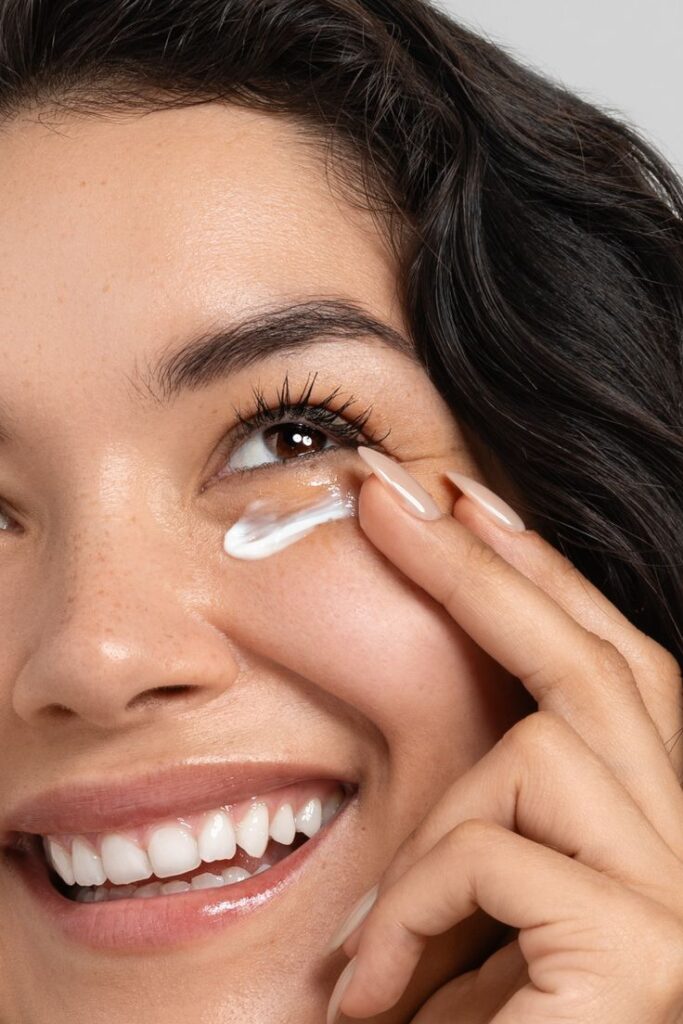
Use your ring finger to gently dab eye cream around the orbital bone.
Eye creams can help:
- Reduce puffiness
- Hydrate
- Improve fine lines
Avoid rubbing aggressively.
Step 6: Moisturizer

Moisturizer locks hydration into the skin.
Even oily skin needs moisturizer.
Choose:
- Gel moisturizer for oily skin
- Lotion for combination skin
- Cream moisturizer for dry skin
Step 7: Sunscreen (Most Important)

Never skip sunscreen.
This is the final step in your morning routine.
Choose:
- SPF 30 or higher
- SPF 50 for Indian summers
- Broad-spectrum protection
- PA+++ or PA++++
Apply:
- Two-finger rule for face and neck
- Reapply every two hours outdoors
Without sunscreen, even the best skincare routine becomes less effective.
The Correct Night Skincare Routine Order

Nighttime is when your skin focuses on repair.
Here’s the ideal order.
Step 1: Makeup Remover or Cleansing Oil
If you wear:
- Makeup
- Waterproof sunscreen
- Heavy foundation
Start with:
- Cleansing balm
- Cleansing oil
- Micellar water
This dissolves oil-based impurities.
Step 2: Water-Based Cleanser
Double cleansing removes remaining dirt, sweat, and residue.
This leaves your skin completely clean without over-scrubbing.
Step 3: Toner
Hydrating toner replenishes moisture after cleansing.
Avoid alcohol-heavy formulas if your skin is dry or sensitive.
Step 4: Exfoliant (2–3 Times Weekly)
Chemical exfoliants help remove dead skin cells.
Popular options include:
- Salicylic Acid (BHA)
- Glycolic Acid (AHA)
- Lactic Acid
Avoid over-exfoliating.
More isn’t better.
Step 5: Treatment Serum
Night is ideal for repairing the skin.
Depending on your concerns, you might use:
- Hyaluronic Acid
- Peptides
- Niacinamide
- Ceramide serum
Step 6: Retinol (If Using)
Retinol should usually be applied after lightweight serums but before moisturizer.
Benefits include:
- Reducing wrinkles
- Improving texture
- Treating acne
- Boosting collagen
Start slowly.
Use:
- Twice weekly
- Then increase gradually
Step 7: Eye Cream
Apply gently without pulling the skin.
Night creams around the eyes often contain nourishing ingredients.
Step 8: Moisturizer
Moisturizer seals in all previous products and supports overnight skin repair.
Step 9: Face Oil (Optional)
Face oils are generally the last skincare step.
They help prevent moisture loss.
Best suited for:
- Dry skin
- Mature skin
- Dehydrated skin
Easy Skincare Routine Order Chart
| Morning | Night |
|---|---|
| Cleanser | Makeup Remover |
| Toner | Cleanser |
| Essence | Toner |
| Serum | Exfoliant (2–3x weekly) |
| Eye Cream | Serum |
| Moisturizer | Retinol |
| Sunscreen | Eye Cream |
| — | Moisturizer |
| — | Face Oil |
The “Thin to Thick” Rule Explained
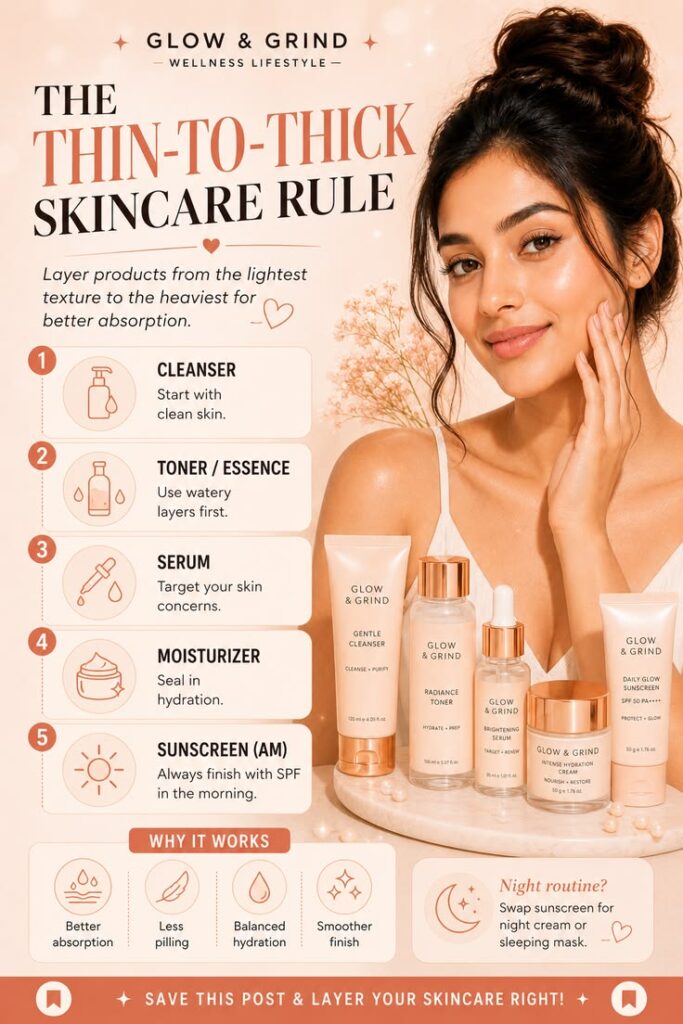
A helpful way to remember skincare layering is:
- Cleanser
- Water-based products
- Lightweight serums
- Creams
- Oils
- Sunscreen (morning only)
This ensures lighter formulas can penetrate before thicker products create a protective layer.
How Long Should You Wait Between Products?
You don’t need to wait 10–15 minutes between every product.
Instead:
- Toner: 10–20 seconds
- Serum: 30–60 seconds
- Moisturizer: 1 minute
- Sunscreen: 2–3 minutes before makeup
Allow each layer to absorb before applying the next.
Common Skincare Layering Mistakes
Many people unknowingly reduce the effectiveness of their routine. Avoid these mistakes:
Applying Sunscreen Before Moisturizer
Sunscreen should always be your final morning skincare step.
Using Too Many Active Ingredients
Combining several strong actives at once can irritate your skin.
Applying Thick Cream Before Serum
Heavy creams create a barrier that prevents lightweight serums from absorbing properly.
Over-Exfoliating
Exfoliating every day can weaken the skin barrier.
Two to three times a week is enough for most people.
Skipping Moisturizer Because of Oily Skin
Oily skin still needs hydration. Skipping moisturizer may lead to even more oil production.
Can You Mix These Ingredients?
Some ingredients work well together, while others require caution.
| Ingredients | Safe Together? |
|---|---|
| Vitamin C + Sunscreen | ✅ Yes |
| Niacinamide + Hyaluronic Acid | ✅ Yes |
| Ceramides + Retinol | ✅ Yes |
| Peptides + Hyaluronic Acid | ✅ Yes |
| Vitamin C + Niacinamide | ✅ Usually Yes |
| Retinol + AHAs/BHAs | ⚠ Use with caution |
| Benzoyl Peroxide + Retinol | ⚠ Often best separated |
| Multiple Exfoliating Acids | ❌ Avoid layering together |
Skincare Order for Different Skin Types
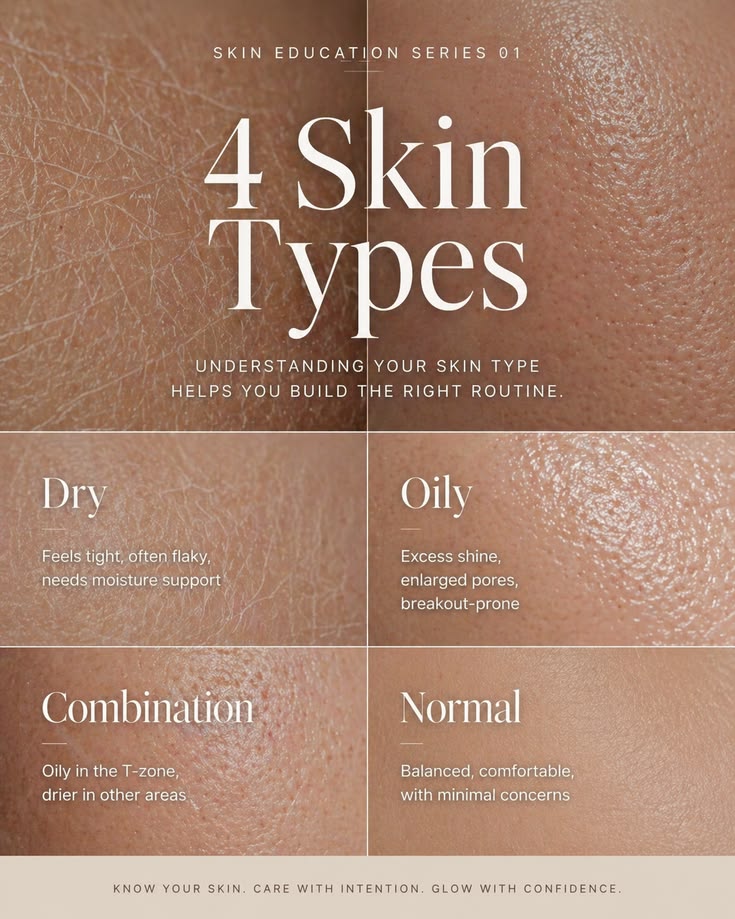
Oily Skin
Morning:
- Gel cleanser
- Niacinamide serum
- Lightweight moisturizer
- Sunscreen
Night:
- Double cleanse
- Salicylic acid (2–3 times weekly)
- Gel moisturizer
Dry Skin
Morning:
- Hydrating cleanser
- Hyaluronic acid serum
- Rich moisturizer
- Sunscreen
Night:
- Cream cleanser
- Hydrating serum
- Ceramide moisturizer
- Face oil (optional)
Focus on balancing hydration while controlling excess oil in the T-zone.
Sensitive Skin
Keep routines simple.
Use:
- Gentle cleanser
- Hydrating serum
- Ceramide moisturizer
- Mineral sunscreen
Introduce one new product at a time.
Frequently Asked Questions (FAQs)
Should sunscreen be the last skincare step?
Yes. Sunscreen should always be the final step of your morning skincare routine before applying makeup.
Do I need toner?
No. Toner is optional. If your cleanser is gentle and your skin feels comfortable, you can skip it.
Can I use vitamin C in the morning and retinol at night?
Yes. This is one of the most effective and beginner-friendly combinations for improving brightness and supporting healthy aging.
Should I apply skincare on wet or dry skin?
Hydrating products like hyaluronic acid work best on slightly damp skin, while stronger actives such as retinol should generally be applied to dry skin to reduce the risk of irritation.
How many skincare products do I actually need?
A basic routine only requires four essentials:
- Cleanser
- Moisturizer
- Sunscreen (morning)
- One targeted treatment serum based on your skin concern
You can always add more products gradually if needed.
Final Thoughts
Learning what order should you apply skincare products is one of the easiest ways to get better results without buying new products. By following the correct layering order—starting with lightweight products and finishing with thicker ones—you’ll help each product perform as intended.
Remember, consistency is more important than complexity. A simple routine followed every day will often outperform an elaborate routine that you use only occasionally.
Build your routine around your skin type, introduce active ingredients slowly, and never skip sunscreen during the day. Over time, these habits can lead to healthier, stronger, and more radiant skin.